
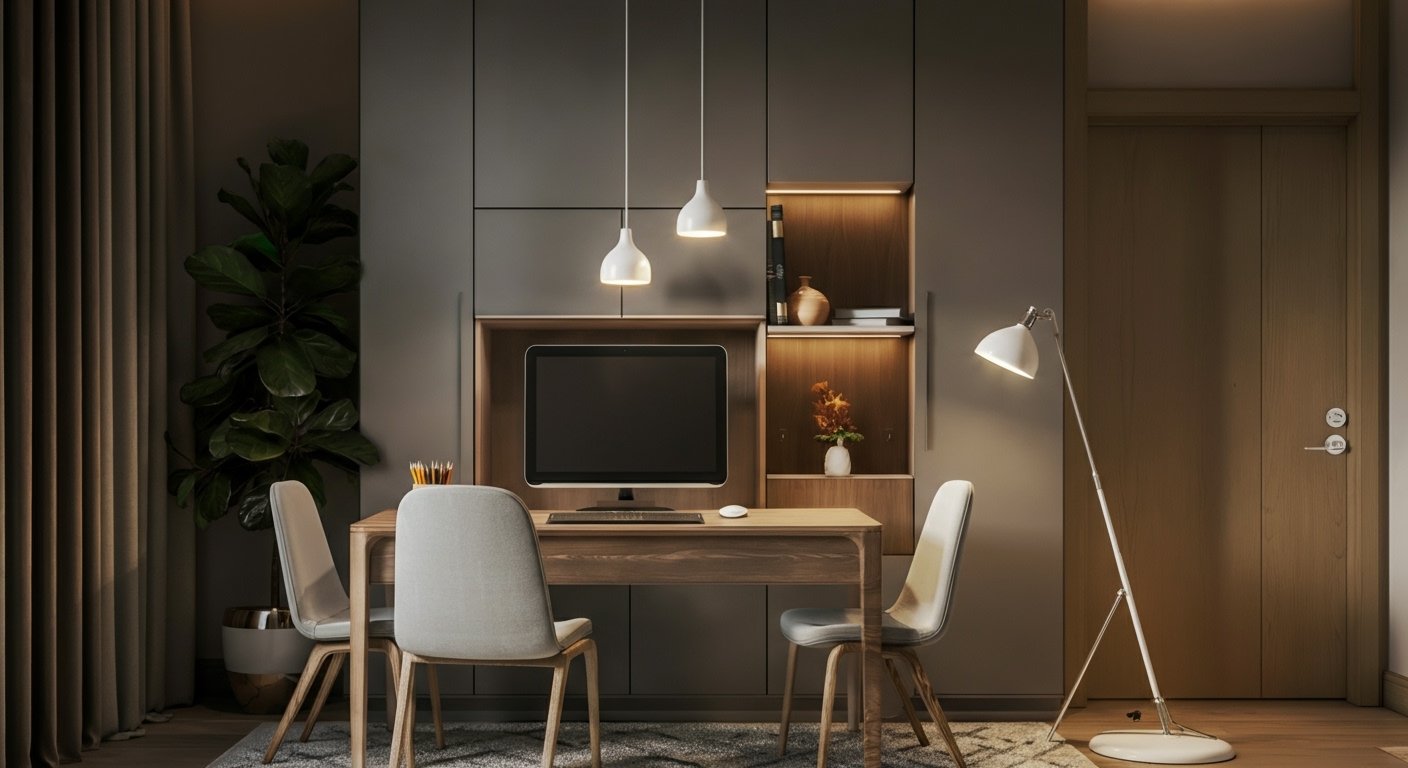
Most Dubai apartments were not designed with homework in mind. The dining table gets cleared for dinner. The bedroom desk is too close to distractions. The sofa is where good intentions go to die. If you have ever watched your child spend more time fidgeting than working, the problem might not be focus or motivation. It might be the setup itself. A dedicated, well-organised homework spot does not require a spare room or a furniture overhaul. It requires understanding what actually helps kids settle into work mode, and what quietly sabotages them before they even start.
The hidden cost of “just use the dining table”
The dining table seems like the obvious choice. It is flat, it is already there, and you can supervise easily. But here is what happens in practice: books compete with placemats, pencils roll onto the floor, and every meal becomes a forced cleanup that interrupts whatever project was in progress. Kids learn that their workspace is temporary, which makes the work itself feel temporary. They never quite settle in. The mental overhead of packing up and setting up every single day adds friction, and friction is the enemy of habit. Some families make it work, but they usually have rules in place, like a dedicated homework caddy that lives on a shelf and comes out at the same time every day. Without that structure, the dining table becomes a zone of daily negotiation rather than a place of focus.
What a proper homework station actually needs
You do not need an expensive desk or a Pinterest-worthy setup. You need four things: a consistent surface, storage within arm’s reach, decent lighting, and freedom from obvious distractions. The surface should be big enough to spread out a textbook and a notebook side by side, but not so big that clutter accumulates. A small desk or a dedicated section of a larger table works. Storage means a caddy, a drawer, or a shelf where pens, rulers, calculators, and notebooks live permanently. If your child has to search for supplies, their brain switches from homework mode to hunting mode, and that transition costs time and focus. Lighting matters more than people think. A dim corner or harsh overhead glare both cause fatigue. A simple desk lamp with a neutral white bulb makes a noticeable difference. Finally, distractions: if the homework spot faces a television, a window onto a busy street, or a sibling’s play area, you are fighting an uphill battle before the first equation.
Budget solutions that actually work in small spaces
In Dubai, where apartments often prioritise open-plan living over dedicated rooms, you have to get creative. A folding desk mounted to a wall can tuck away after homework hours. A rolling cart with drawers serves as both storage and a mobile station that can move to the quietest room at any given moment. Corner desks fit into underused spaces without dominating the room. If your child shares a bedroom, consider a desk with a small shelf or pinboard above it to create a visual boundary, a sense of “this is my zone.” For younger children, a lap desk on a beanbag can work surprisingly well, especially if the alternative is the sofa with no boundaries at all. The key is consistency. Wherever the spot is, it should be the same every day, with the same supplies, at roughly the same time.
The organisers that are worth buying (and the ones that are not)
Desk organisers range from flimsy plastic trays to elaborate multi-tiered contraptions that take up more space than they save. In practice, simpler is better. A single desktop caddy with compartments for pens, scissors, glue, and erasers covers most primary school needs. A small filing rack or magazine holder keeps workbooks upright and visible instead of buried in a pile. Drawer dividers help if your child has a desk with a drawer, but only if you actually sort things into them. The products that tend to fail are the ones with too many tiny compartments, because children do not sort that precisely, or the ones made from materials so light they tip over when you grab a pen. Look for something with a bit of weight, easy-to-clean surfaces, and compartments large enough to fit chubby markers alongside regular pencils.
Getting your child to actually use the space
You can set up the perfect homework station and still watch your child migrate to the sofa. The fix is not more rules. It is making the space feel like theirs. Let them choose a small plant, a photo, or a single decoration. Let them arrange the supplies in their own logic, even if it looks chaotic to you. The goal is ownership. Once they see the space as “my spot,” they are more likely to use it without prompting. Pair that with a consistent routine, homework starts at the same time, in the same place, with the same low-key ritual like a glass of water or five minutes of quiet first, and you build a habit that carries itself. The spot is not magic. The consistency is.