
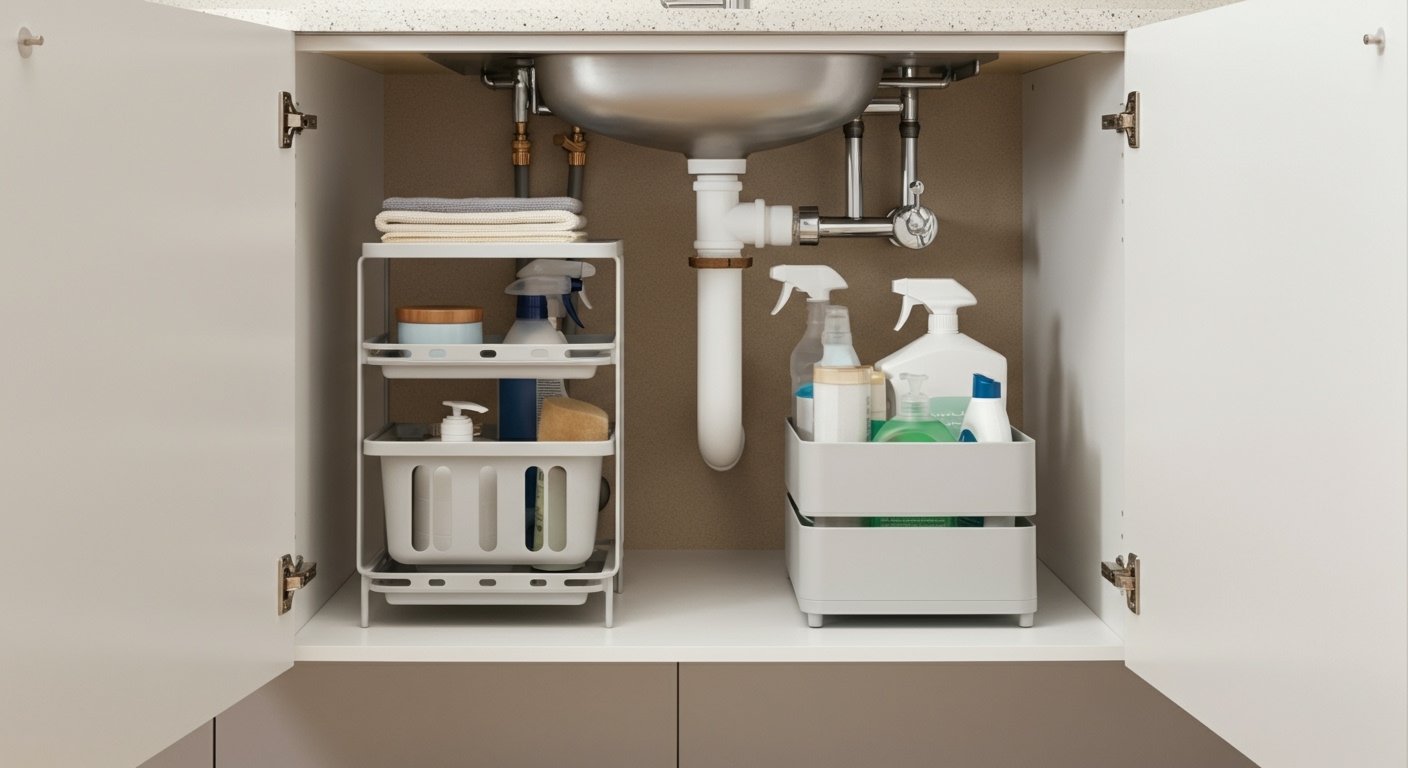
Under-sink cupboards are where good intentions go to become an untidy pile of bottles, cloths, and half-used cleaning products. The shape is awkward, the pipework is inconvenient, and the whole area often becomes wasted space by default. A sensible organiser can improve that quickly.
Why this space is difficult
Storage around plumbing is never straightforward. Without a system, people stack things wherever they fit and hope for the best. That usually means products get lost, duplicates appear, and nothing feels easy to reach when needed. In smaller homes, that problem becomes more obvious because awkward storage ends up carrying more of the household load.
What actually works
Stackable shelves, pull-out trays, and caddies with flexible spacing are usually more useful than rigid one-piece units. The space needs adapting to, not forcing. Organisers that allow room around pipes are far more practical than those pretending pipework does not exist. Vertical storage is especially useful here. Many under-sink cupboards have enough height to be helpful but no structure to support it. A decent organiser turns that empty air into usable space without making access harder.
Why reach matters
Storage is only useful if it is easy to use. Deep organisers that hide things at the back can become just as frustrating as the original mess. Pull-out or open-access options usually work better because they keep everyday products visible and stop the cupboard turning into a guessing game every time you need bin bags or spray cleaner.
Where people usually go wrong
A common mistake is buying a unit that seems clever on a product page but ignores the actual cupboard shape at home. Pipe placement, shelf height, and door clearance matter more here than they do with most storage buys. The best organisers tend to be adjustable, forgiving, and plain rather than fancy.
It also helps if the system makes cleaning simpler. Under-sink areas collect dust, drips, and stray residue, so anything that is awkward to wipe down will age badly. Easy-clean shelves and trays are much more useful than rigid systems that trap grime in corners.
Why this upgrade saves more hassle than it sounds
The gain is not just a tidier cupboard. It is being able to find bin bags, sprays, cloths, or spare soap quickly instead of kneeling on the floor digging through layers of semi-organised hope. A better setup reduces the small household delays that keep repeating all week.
That is especially useful in compact homes, where storage tends to work harder and every awkward cupboard gets noticed faster. If under-sink space can become properly usable, the whole kitchen or bathroom often feels more under control.
What to avoid
Very deep organisers can hide items just as effectively as the original clutter. Designs that ignore pipe placement are also a quick disappointment, because they look plausible until you try to fit them in.
Quick checklist before buying
- Works around pipework
- Makes items easier to reach
- Easy to wipe clean
- Suits cleaning supplies or bathroom products
- Uses vertical space sensibly
A good under-sink organiser does not make the cupboard glamorous. It just makes it useful, which is better.