
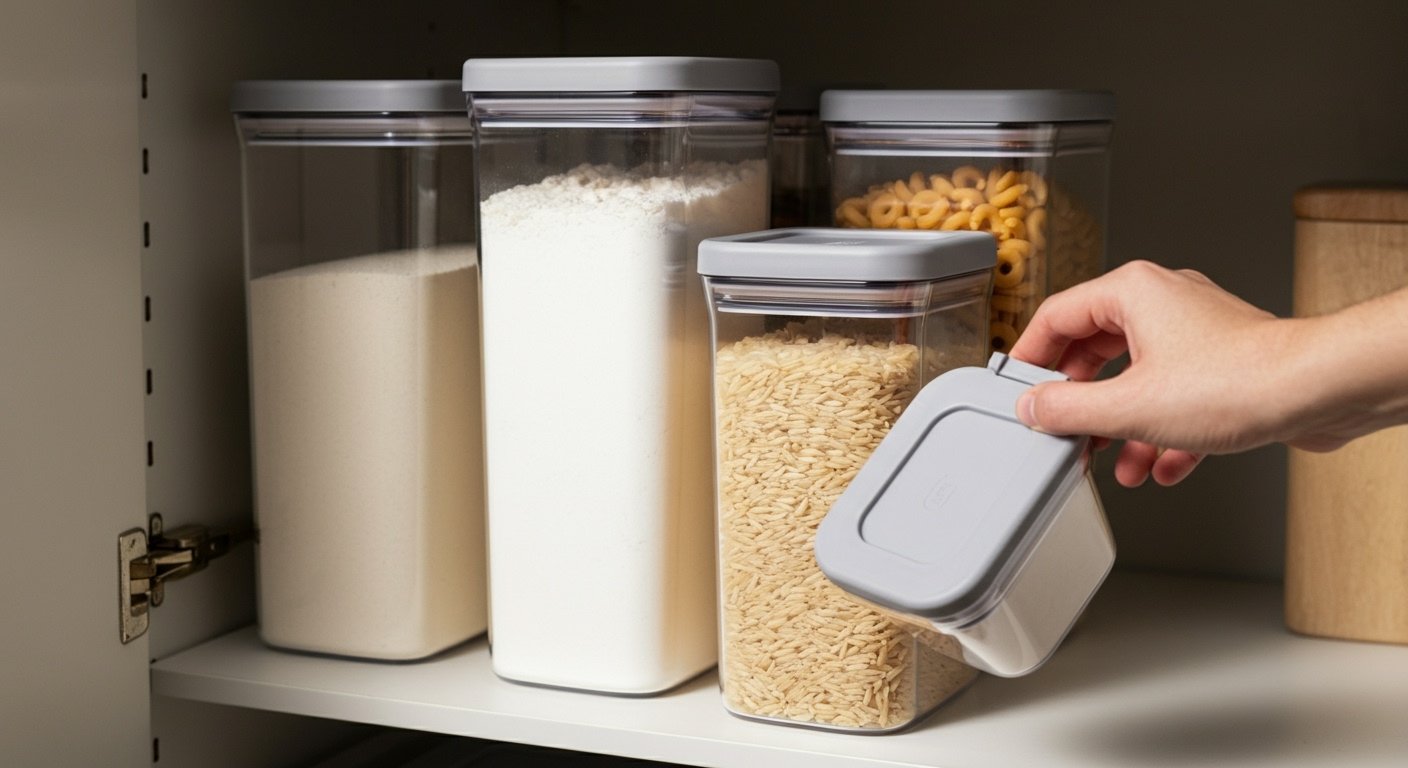
If your pantry always feels slightly sticky in summer, you are not imagining it. Dubai humidity does a number on dry goods. Cereal goes soft, crackers lose their crunch, and sugar clumps the moment the bag is left open. The fix is not buying a full set of expensive matching containers. It is choosing a few key pieces that seal well, fit your shelves, and make your weekly shop easier to store without wasting food.
Start with the 3 items that go bad first
If you are on a budget, do not containerise everything. Start with the foods that change fastest in humidity: cereal, biscuits and crackers, and anything powdery like flour, sugar, and milk powder. Rice and pasta can also benefit, but they usually survive longer in their original packaging if you keep the bags clipped and sealed inside a larger bin. Doing the top three first gets you the biggest payoff for the smallest spend.
The lid design that actually seals (and what is just “pretty”)
For Dubai kitchens, the lid seal is the whole point. Look for a gasket (a rubber or silicone ring) and a locking mechanism that pulls the lid down evenly. Simple flip-top lids can be fine for snacks you finish quickly, but they are not great for keeping humidity out over weeks. You do not need brand-name containers, but you do want lids that close with a clear click and do not wobble. If you can press the lid and feel air move, it is not sealing properly.
Square vs round: which stores more in real cupboards
Square and rectangular containers usually use space better, especially in narrow Dubai apartment cupboards. Round containers waste corners. If your pantry shelf is deep, pick containers you can pull out with one hand. That often means medium sizes you can stack, not one giant bin you have to wrestle. For kids’ snacks, smaller containers also stop the “open bag” problem, because you refill the small container and keep the bigger pack sealed.
Plastic or glass: the practical choice for families
Glass is great for smells and staining, but it is heavier and less forgiving if you have kids helping. For dry goods, good-quality plastic containers are usually enough. The bigger issue is the lid. A solid lid on plastic will beat a weak lid on glass. If you do buy plastic, choose thicker, rigid bodies rather than thin flexible tubs, because thin containers can warp and make lids stop fitting properly over time.
Small extras that help with Dubai humidity (without turning it into a project)
A simple clip on opened bags helps. So does storing packets inside a larger sealed bin if you do not want to decant. If you have room, a few silica gel packs saved from packaging can help in a larger pantry bin, but keep them away from kids and do not let them touch food directly. The biggest “extra” is actually a habit: close containers immediately. In humidity, even ten minutes open on the counter can soften biscuits.
The quick pantry reset that keeps everything under control
Once a week, pick one shelf and do a two-minute reset. Check anything open, tighten lids, and wipe crumbs so ants do not get ideas. If you are decanting, top up the smaller “daily use” container from the larger sealed pack, rather than keeping multiple half-open bags. This is how you stop the pantry turning into a graveyard of stale snacks.
Quick FAQs
Do I need vacuum-seal containers?
Not for most pantries. A good gasket seal and locking lid is usually enough for dry goods.
What size should I buy first?
Start with one cereal-sized container, one medium container for biscuits, and one for flour or sugar. Add more once you know what fits your shelves.
Is decanting everything necessary?
No. It is fine to keep bags inside a larger sealed bin. The goal is reducing air and humidity exposure.