
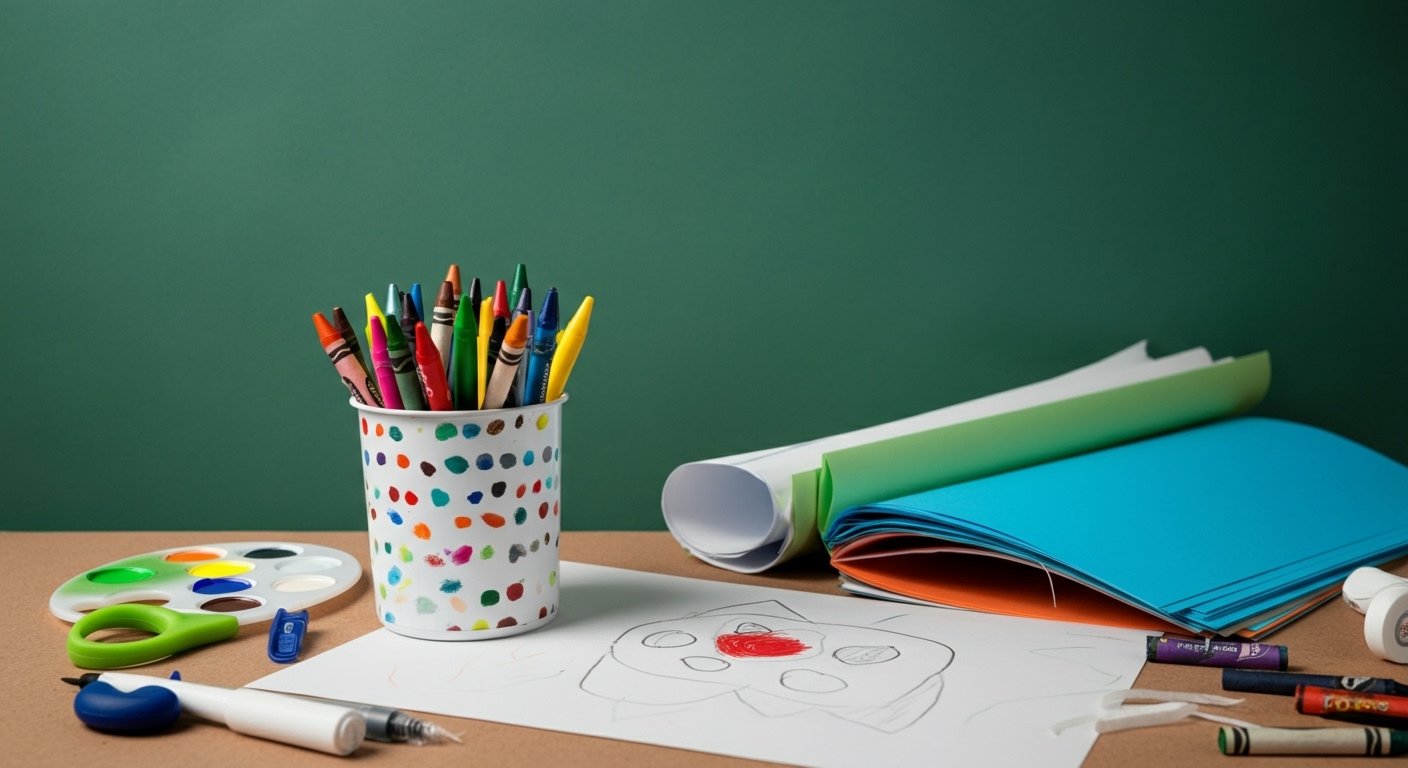
In Dubai, where summer afternoons can stretch endlessly indoors and school holiday boredom sets in fast, having a well-stocked art supplies box is more valuable than most parents expect. The trouble is that art supplies add up quickly, especially when children go through materials at an impressive rate or lose interest in items before they are half used. Building a practical art kit without overspending takes some thought about what actually gets used versus what looks appealing on the shelf.
Starting with the essentials
Before buying anything, take stock of what you already have scattered around the house. Crayons migrate into couch cushions, markers hide in school bags, and there is probably a half-used sketchbook somewhere in a drawer. Consolidating what exists prevents duplicate purchases and gives you a clearer picture of actual gaps. The core essentials for most children include something to draw with, something to colour with, paper, scissors, glue, and maybe paint if you are willing to handle the mess. Everything else, the glitter, the specialty papers, the elaborate craft kits, falls into the nice-to-have category. Kids who have too many options often use none of them, while a child with basic supplies and some imagination will stay busy for hours.
Paper and sketchbooks
Plain white paper in bulk is the foundation of any art supplies stash. A ream of printer paper works perfectly well for everyday drawing and can be picked up inexpensively almost anywhere. For painting or heavier media, thicker paper prevents warping and bleeding. Sketchbooks are good for children who like keeping their work together, though some kids prefer loose sheets they can display or give away immediately. Construction paper in assorted colours is useful for collages and craft projects, but do not overbuy since it dries out and becomes brittle if stored too long, especially in Dubai humidity. A small selection of colours that get rotated is better than a massive pack that goes stale.
Crayons, markers, and coloured pencils
Each has its place depending on your child and your tolerance for laundry stains. Crayons are the most forgiving. They do not dry out, they wash out of most fabrics, and even the budget options produce decent colour. Washable markers are ideal for younger children who have not yet learned to keep caps on, though washable does not always mean easily washable, so check reviews. Permanent markers belong nowhere near small children, no matter how careful they claim to be. Coloured pencils suit older kids who want more control and detail. They last longer than markers and create less mess than crayons, though cheap ones can have brittle leads that break constantly. A mid-range set of 24 colours covers most needs without overwhelming choices.
Glue, scissors, and tape
Washable glue sticks are easier to manage than liquid glue for most projects, and they create less mess when children inevitably squeeze too hard. Keep a bottle of white PVA glue for projects that need stronger hold, like attaching heavier items to paper. Child-safe scissors with rounded tips are essential for younger kids, but once children reach about age seven or eight, they can usually handle sharper scissors that actually cut cleanly, which reduces frustration during projects. Masking tape and washi tape have become staples in many craft boxes, useful for everything from creating straight lines on paintings to decorating cards directly.
Paint without the chaos
Painting does not have to mean an hour of cleanup. Washable poster paints in primary colours plus black and white give children everything they need to mix most shades. Small paint palettes or even old muffin tins work for mixing colours without needing fancy equipment. Chunky brushes suit younger children, while older kids appreciate having a couple of different sizes for detail work. The real key to manageable painting is the workspace. A plastic tablecloth or old shower curtain under the painting area, smocks or old t-shirts, and newspaper to protect surfaces make the difference between an enjoyable activity and a stressful one. Watercolour sets are a lower-mess alternative that older children often enjoy, and even inexpensive school-grade watercolours produce satisfying results.
Storage and organisation
The best art supplies in the world are useless if children cannot find them or if the box becomes a jumbled mess that nobody wants to dig through. A clear plastic container with a lid keeps everything visible and dust-free. Some parents use smaller containers or zip bags inside the main box to separate categories like drawing tools, paper crafts, and paint supplies. Label the sections if your children are old enough to read, or use picture labels for younger ones. Keeping supplies accessible encourages independent creativity. If children have to ask an adult to get the art box down from a high shelf every time, they will ask less often. A dedicated shelf or corner at child height makes art an easy choice when boredom strikes.
Restocking strategically
Rather than doing one big shop and hoping it lasts, keep a mental note of what runs out fastest. For most families, paper and glue sticks deplete first, followed by favourite marker or crayon colours. Back-to-school season in August and September often brings discounts on basic supplies, and end-of-season sales can be good for specialty items. Resist the urge to buy elaborate themed craft kits unless your child has specifically asked for one and will realistically complete it. Those kits often end up half-finished in a cupboard, and the per-project cost is much higher than buying basic supplies and finding free project ideas online. A simple, well-maintained art supplies box will see far more use than a collection of fancy kits gathering dust.