
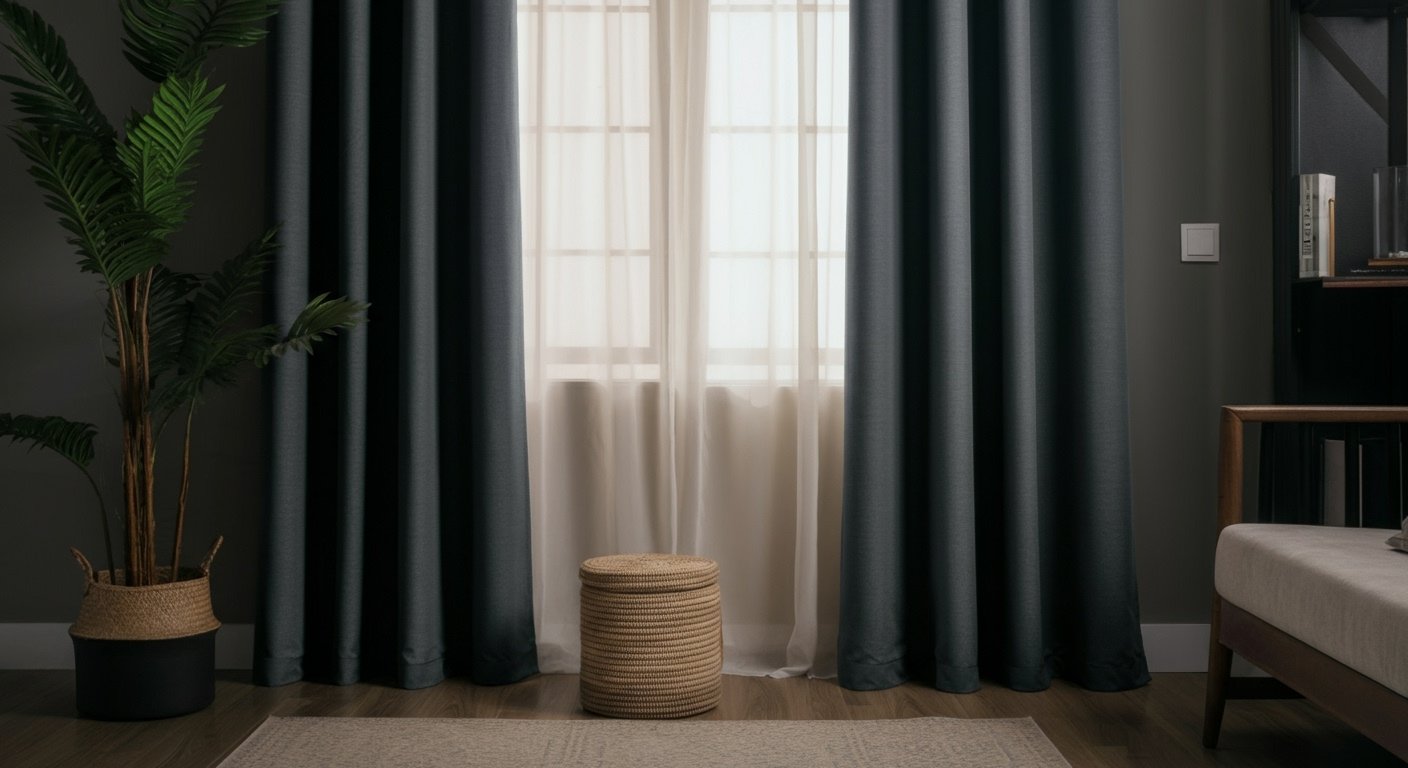
If your bedroom gets hit by early morning sun or street lights, blackout curtains are one of the fastest “quality of life” upgrades you can make in a Dubai apartment. The trick is not paying for a fancy brand name when what really matters is the lining, the fit, and how you hang them so light does not leak around the edges.
Start with the problem: light leaks, not “blackout” as a label
In practice, most disappointment comes from gaps. Even a thick curtain will feel useless if it sits 10cm short on each side of the window, or if the rod is mounted too close to the wall. Before you shop, measure the window width, then plan to add extra coverage on both sides. If you are trying to block morning sun, you want the curtain to extend wider than the glass so the light cannot sneak in around the edges.
Fabric and lining: what to look for on a budget
For affordable options, you are usually choosing between a “blackout coated” fabric (a layer applied to the back) and a separate blackout lining. Coated fabrics can work, but they vary a lot and sometimes feel stiff. A separate lining is often more forgiving: you can pick a nicer looking front fabric while keeping the performance in the lining. If the store listing is vague, look for clear terms like “blackout lining” or “thermal blackout” and check review photos in daylight and at night.
Sizing that actually works (and does not look odd)
Two numbers matter: width and drop. For width, aim for curtains that are at least 1.5x the window width in total (two panels combined) so they still look full when closed. For drop, decide whether you want the curtain to skim the floor or sit just below the window sill. Floor length looks cleaner, but in Dubai it also means you need to think about AC vents and dust, because fabric on the floor will pick up grime faster.
Rod and mounting: small details that change everything
If you can, mount the rod a bit higher than the window frame and extend it wider than the window. That gives you more overlap and less light spill. If you are renting and cannot drill, tension rods can be fine for lightweight curtains, but they usually leave bigger edge gaps. A budget compromise is adhesive curtain rod brackets, but check the weight rating and make sure the wall surface is clean and smooth before trusting them.
When to consider a liner, a second layer, or a blind
If you are dealing with very bright morning sun, consider doubling up: a blackout liner behind a decorative curtain, or a simple roller blind behind the curtain. It is not about being fancy. Two layers reduce light leaks and can help with heat. This is especially useful in rooms with big windows or in buildings where the glass is not tinted.
Quick checklist before you buy
- Measure window width and height, then add extra coverage on both sides
- Choose lining first, then pick the front fabric you like
- Check hanging method (eyelet, hooks, tabs) matches your rod
- Plan for AC and dust if you are going floor length
- Look at real photos of the curtain in daylight and at night