
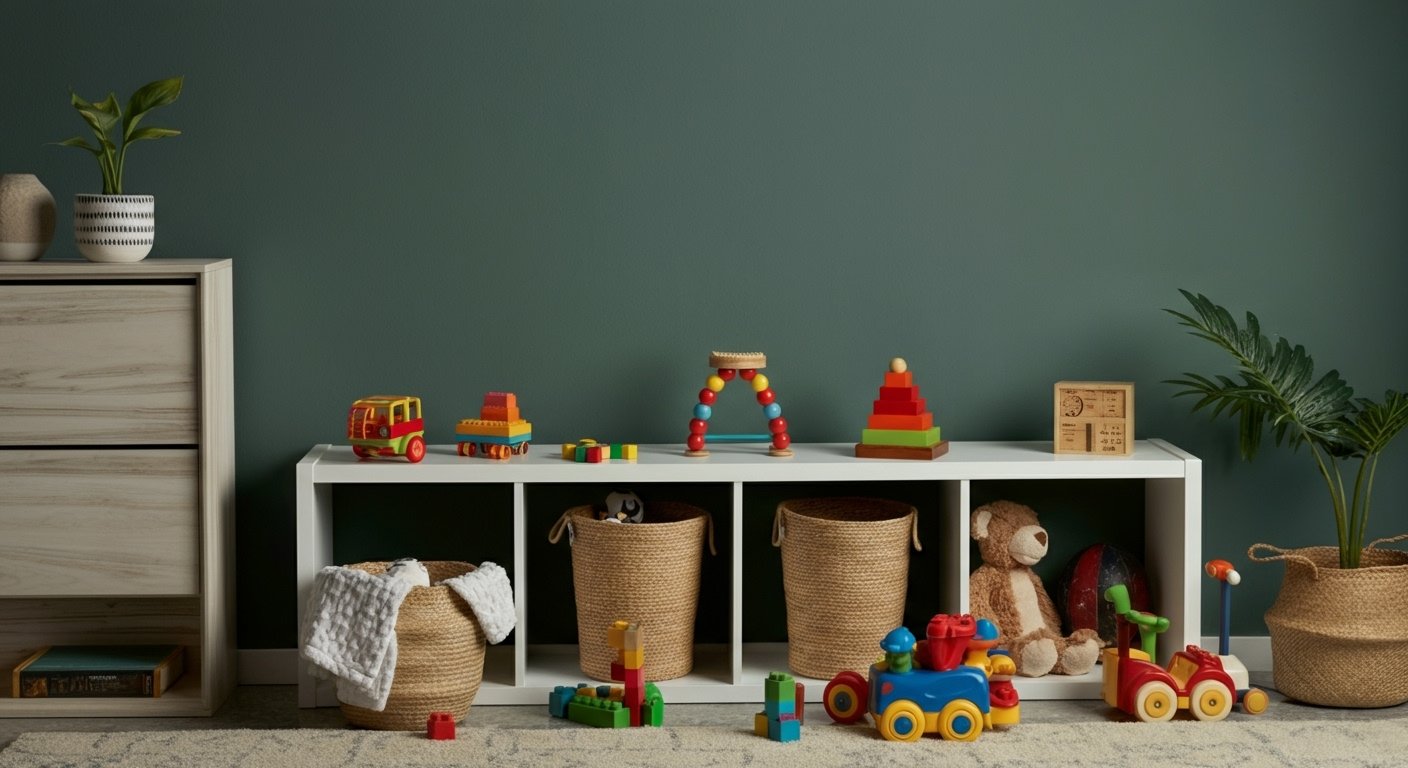
Toy clutter expands to fill whatever room it is given, and then a bit more. In many homes, that means the living room stops feeling like shared space and starts feeling like a toy annex. The right storage fix does not need to be clever. It just needs to be realistic.
Why this matters in family homes
Living rooms usually have to do a lot at once. They are where people relax, host visitors, watch television, and somehow still leave room for children to play. Without decent toy storage, the room starts feeling permanently temporary, as if it is waiting to be tidied but never quite gets there.
What actually helps
Open baskets, low bins, and simple units usually work better than fiddly category systems. The aim is quick resets, not museum-level sorting. If it takes too many steps to put toys away, everyone quietly stops bothering.
It also helps if the storage suits mixed toy sizes. A setup that only works for blocks but not stuffed toys, books, or oddly shaped plastic items is going to fail almost immediately. Flexible storage is usually more valuable than hyper-neat storage.
Why speed matters
Family tidying often happens in short bursts. That means the best storage is the kind children can understand and adults can use half-asleep at the end of the day. A neat-looking system that nobody can reset quickly becomes decorative rather than practical.
How to keep the room feeling like a living room
The best toy storage usually blends in rather than shouting. Baskets that slide under furniture, compact low units, or storage that sits naturally alongside the sofa area tend to work better than giant primary-coloured towers that make the whole room feel designed around clutter.
It also helps to accept that the goal is not a toy-free room. The real aim is a room that can switch back to adult use quickly, without a long evening ritual of sorting tiny objects by category.
Where most systems fail
They fail when they ask for too much discipline. If toys need to be divided into five careful zones every night, the system will probably last a week before everyone gives up. The storage that survives is the storage that works when people are tired, in a hurry, or halfway through tidying with one eye on bedtime.
A better setup makes quick resets possible. It does not demand a full family management strategy.
What to avoid
Storage that looks tidy but is hard for children or tired adults to use properly usually becomes one more layer of frustration. Very large units can also make the room feel more storage-led than living-led, which defeats the point a bit.
Quick checklist before buying
- Easy to access
- Quick to tidy into
- Durable enough for daily use
- Does not dominate the room
- Works with mixed toy sizes
A good toy storage setup gives the room back without asking too much in return.