
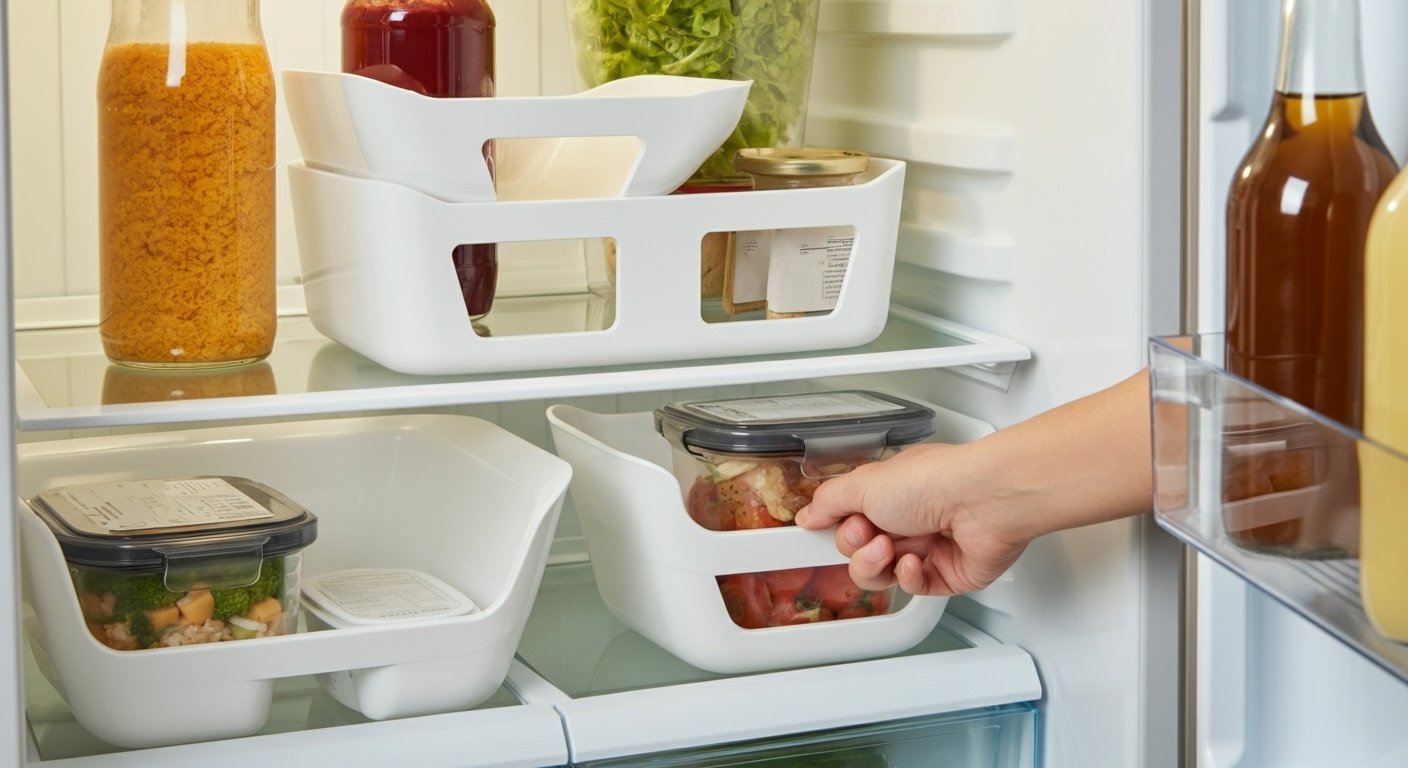
Leftovers are only money-saving if anyone remembers they exist. In many fridges, they disappear behind sauces, containers, and ambitious grocery plans until they are no longer useful. A basic organiser can stop that happening quite so often.
Why this matters for family kitchens
Fridge clutter has a direct cost. When leftovers get hidden, people buy more food than they need, repeat ingredients they already have, and end up throwing out items that should have been eaten days earlier. For families trying to save money without turning meal planning into a full-time job, visibility matters more than perfection.
What actually works
Clear bins and shallow organisers tend to be more useful than elaborate systems. The aim is visibility, not turning the fridge into a showroom. If a container or organiser makes food harder to see, it is solving the wrong problem.
One useful trick is grouping by purpose rather than by obsessive categories. Leftovers together, snack items together, breakfast items together. That kind of system is simple enough to maintain even when the week gets busy, which is usually the point where fridge organisation otherwise collapses.
Why size matters
Oversized organisers waste shelf space and can make a fridge feel strangely harder to use. Smaller or medium-sized bins usually work better because they let you separate items without blocking sightlines. It should still be easy to scan the shelves and know what is there in a few seconds.
Weight matters too. Heavy organisers are annoying if they make quick clean-ups harder or if they need to be lifted constantly just to reach what is behind them. A practical organiser should reduce friction, not add it.
A practical system that tends to stick
The most useful fridge systems are not especially glamorous. A leftovers zone, a family snack zone, and perhaps one area for breakfast or lunchbox items is often enough. When organisation gets too detailed, people stop following it the first time a rushed grocery shop lands in the fridge all at once.
It also helps if the organisers are easy to remove and rinse quickly. Any system that feels annoying during cleaning day tends to be quietly abandoned, which is how the mystery tubs return.
How to make leftovers easier to use
One of the best habits is keeping cooked food at eye level rather than tucking it behind condiments or large drink bottles. That sounds simple, but it changes what actually gets eaten during the week. If leftovers are the first useful thing you see when the fridge opens, they stop becoming a noble intention and start becoming lunch.
Shallow organisers help here because they keep containers visible without forcing you to stack them too deeply. A practical fridge does not need to look immaculate. It just needs to make the edible things easier to spot than the distractions around them.
What to avoid
Very tall bins can turn the back of the fridge into a mystery zone, and rigid systems can become awkward if your grocery routine changes week to week. It is also worth avoiding anything that makes routine cleaning more annoying than it already is.
Quick checklist before buying
- Clear material for easy visibility
- Easy to lift and wipe down
- Fits standard fridge shelves
- Useful for leftovers and snacks
- Does not waste vertical space
A sensible fridge organiser does not need to look clever. It just needs to make food easier to find before it becomes waste.