
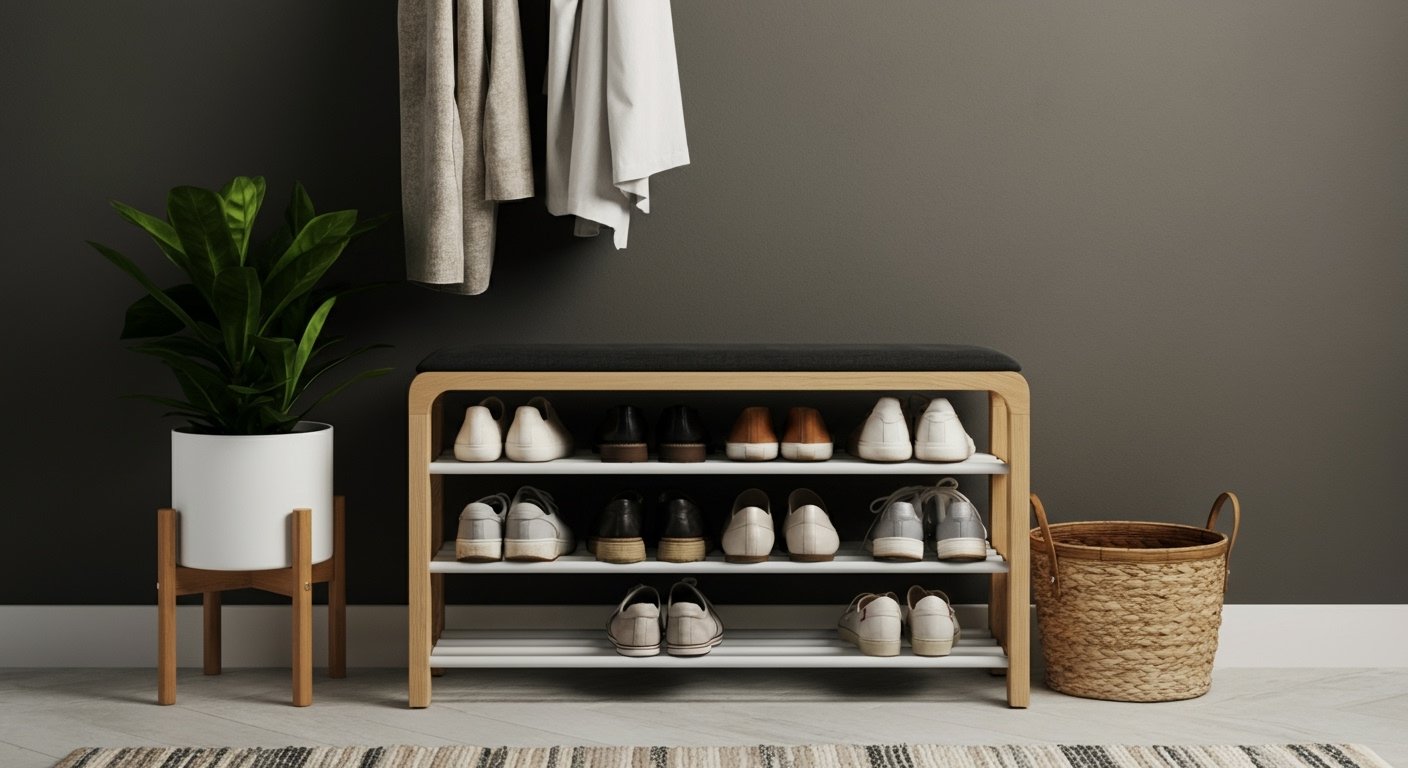
Shoes have a way of multiplying when no one is looking. In smaller homes, they spread from the front door into corners, under benches, beside strollers, and somehow into rooms where they have no business being. The problem is not usually the number of shoes, it is the lack of a simple system that stops them becoming part of the scenery.
Why this matters in Dubai
Dubai households often move quickly in and out, especially on school mornings, workdays, and weekends when everyone seems to be leaving at once. That means entry spaces need to work hard without taking over the home. A bulky shoe rack can be just as annoying as no shoe rack at all if it clogs the walkway or turns the doorway into a permanent obstacle course.
What actually works
The best shoe rack for a smaller space is usually narrow, easy to clean around, and realistic about the household it is serving. That last part matters. There is no point buying a delicate rack for a home full of school trainers, gym shoes, sandals, and the occasional muddy pair that needs to stay out of the wardrobe for a while.
Vertical storage helps, but only if the rack is stable and simple to use. People stop using systems that feel fiddly. If a rack makes it awkward to grab shoes in a hurry or impossible to return them neatly, the pile returns within days. Good storage should reduce friction, not create a new version of it.
Open racks tend to suit busy homes because they are fast to use and easy to wipe down. Closed cabinets can look tidier, but they are not always ideal if damp shoes need a bit of airflow before being tucked away. The right answer depends less on design trends and more on whether the setup will still feel practical two weeks later.
What to avoid
Very deep units can swallow far more space than expected, especially near narrow entrances or apartment doors. It is also worth avoiding racks that only suit one type of shoe, because family homes rarely contain one neat category of footwear. If half the pairs do not fit properly, the floor becomes the overflow zone again.
Another mistake is treating the shoe rack as a miracle fix without thinking about capacity. A compact rack is useful, but it still needs enough room for the shoes that are actually in use most days. The aim is not showroom perfection. It is a calmer, easier doorway.
Quick checklist before buying
- Narrow footprint that suits smaller entrances
- Stable frame that can handle daily family use
- Enough clearance for trainers, sandals, and bulkier shoes
- Easy to clean around and underneath
- Simple design people will actually use every day
A useful shoe rack does not have to look dramatic. It just needs to stop the entrance from feeling chaotic every time someone walks through the door. In a smaller home, that can make the whole place feel a little more under control.