
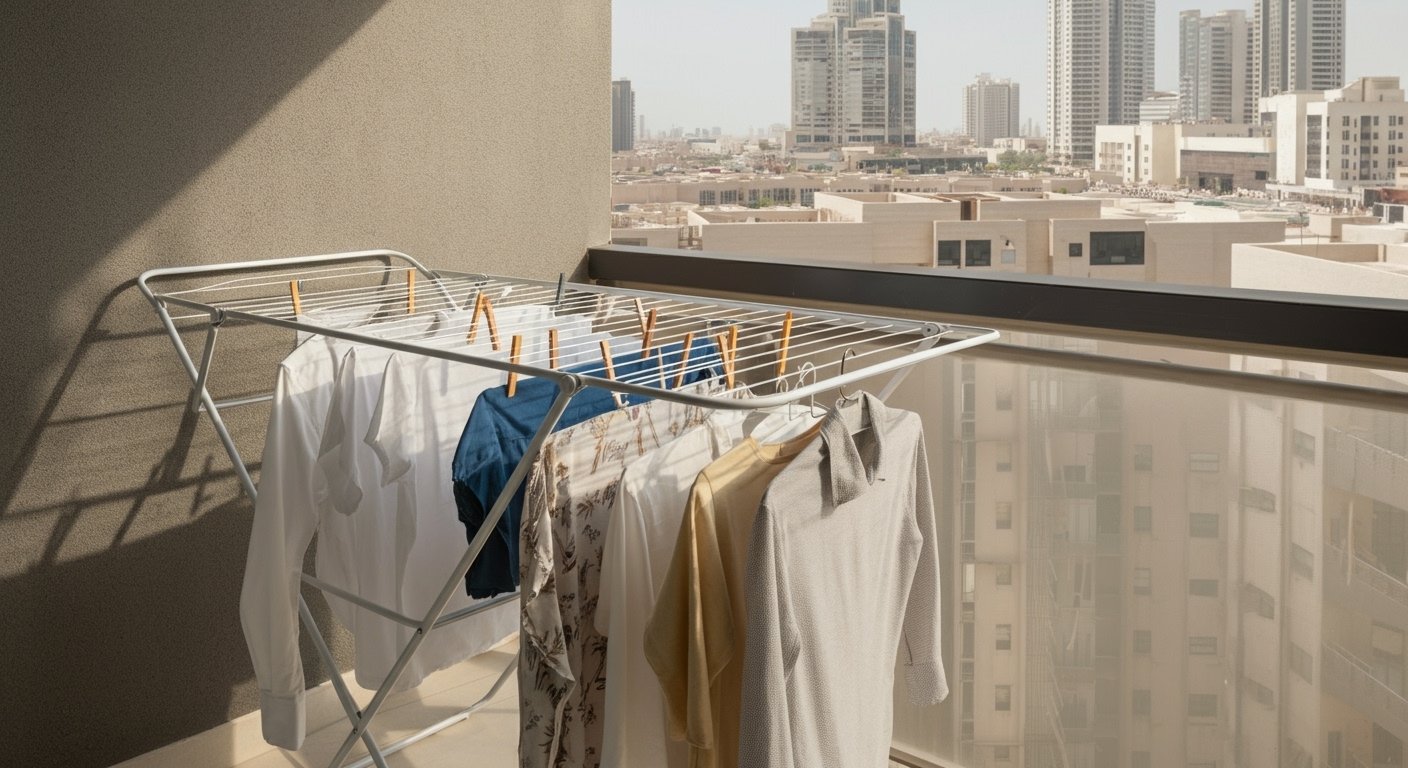
In a Dubai apartment, laundry is a daily negotiation between space, humidity, and the fact that your balcony is not always usable. A drying rack that is too small turns laundry into piles. One that is too big blocks your corridor and makes everyone grumpy. The good news is you do not need a complicated setup. You just need to choose the right style of rack for your home, and stop buying the versions that look clever but collapse, rust, or sag after a month.
Start with your real drying environment
Before you buy anything, decide where you actually dry clothes most days. If you dry indoors with AC, airflow matters more than direct sun. If you dry on the balcony, stability and rust resistance matter. In many Dubai buildings, balcony space is limited and winds can be stronger than you expect, so a light rack that tips easily is a poor choice. If your rack will live near a window, check that it can handle the drip from heavier items without warping the floor, and plan for a tray or a towel underneath on humid days.
The rack shapes that work best (and why)
Winged racks are the classic for a reason. They are stable, fold flat, and can hold a full family load if the bars are spaced well. The weak point is usually the hinge and the thin side arms, so avoid the flimsy ones that flex when you hang jeans.
Tower racks can be great in small apartments because they go vertical, but only if they have a wide base and lock in place. If you have kids, pick one that does not wobble when it is bumped. Tower racks are best for lighter items, baby clothes, and socks. Heavy towels can make them top-heavy if you load the top levels first.
Wall-mounted or ceiling-mounted lines are popular in some buildings, but they are only worth it if your landlord allows it and you have a dedicated space. They are brilliant when done right, but a rushed installation can turn into holes you later have to explain.
What to check in the build quality (the boring stuff that saves money)
Look closely at the joints, the thickness of the bars, and the way it locks open. A rack that does not lock properly will slowly collapse as you load it. Powder-coated steel is usually more durable than painted metal, and stainless options resist rust better if you are drying on a balcony. Plastic connectors are not automatically bad, but they should feel solid, not brittle. If you can twist the frame with one hand, it will not survive weekly use.
Bar spacing: the detail that changes drying time
If the bars are too close together, thick items like hoodies and towels will stay damp longer, especially indoors. If the bars are too far apart, smaller items droop and stretch. A simple trick is to hang heavier items across two bars so air can move between layers. If you are drying school uniforms, check that there is enough length to hang trousers without them folding in half, because that fold becomes a damp line that never dries properly.
How to dry faster in humidity without buying another gadget
Two changes make the biggest difference: spacing and airflow. Do not pack items shoulder-to-shoulder. Leave gaps. If you dry indoors, aim the AC so air moves past the rack, not straight at it, and keep the rack slightly away from the wall. If you have a small fan, run it for an hour and you will feel the difference. In Dubai’s humid months, this can turn “still damp at bedtime” into “dry enough to fold”.
What to skip (even if it looks clever)
Be cautious with ultra-compact racks that claim to hold a full load. They usually turn laundry into a dense block, which dries slowly and smells musty. Also skip racks that rely on very thin wire bars, as they can leave crease lines on lighter clothes and bend over time. If you see a rack that has a dozen little moving parts, assume something will snap. You want simple and sturdy, not a transformer.
Quick FAQs
Is balcony drying always better?
Not always. Direct sun can fade some fabrics, and wind can send socks to the neighbour’s balcony. Indoors with airflow can be more reliable.
Should I buy a rack with a shoe section?
Only if you will use it. For most people, a separate small shoe rack or a tray works better and keeps wet shoes away from clothes.
What is the easiest “one rack” choice for a family?
A stable winged rack with thicker bars and a lock-open mechanism is usually the best all-rounder.